
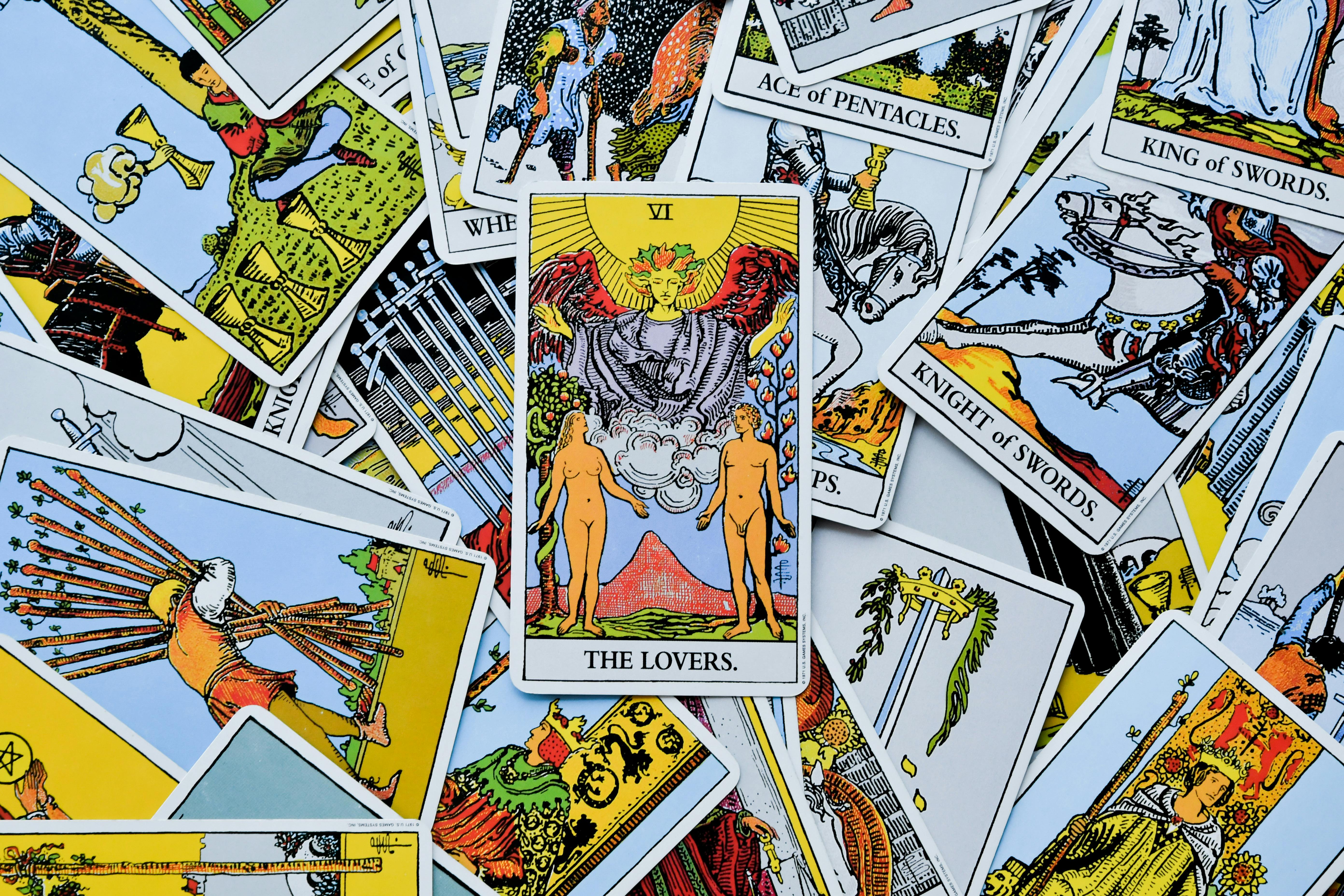
Tarot is one of the most well-known divination tools in modern witchcraft — a symbolic system of 78 cards used for reflection, guidance and intuitive insight.
While many people associate tarot with fortune telling, its true power lies in helping us explore questions, patterns and possibilities. Each card carries layers of imagery and archetypal meaning that speak to both the conscious and subconscious mind. When we lay the cards, we are not predicting a fixed future – we are opening a conversation.
A tarot reading invites you to pause. To ask better questions. To notice what resonates. The cards do not decide your path; they illuminate it.
Whether you are completely new to tarot reading or returning after a long break, this guide will walk you through the foundations – how tarot works, how to begin, and simple ways to build confidence with your own intuitive practice.
HOW TAROT WORKS
A traditional tarot deck contains 78 cards, divided into two main sections: the Major Arcana and the Minor Arcana.
The Major Arcana consists of 22 cards that represent significant life themes and archetypal energies — such as The Fool, The Empress, Death, and The World. These cards often reflect bigger shifts, deeper lessons, or important turning points.
The Minor Arcana contains 56 cards divided into four suits — Cups, Pentacles, Swords and Wands. These relate more to everyday experiences, emotions, thoughts, work, relationships and actions. They add detail and context to a reading.
When you perform a tarot reading, the meaning of each card is shaped by:
- The question being asked
- The position of the card in the spread
- The surrounding cards
- Your intuitive response to the imagery
Tarot is not about memorising every definition perfectly. It is a dialogue between symbolism and intuition. The images on the cards are designed to spark recognition — feelings, memories, patterns and possibilities.
Over time, you begin to notice how certain cards speak to you personally. That relationship is what turns tarot from a deck of cards into a trusted tool.
How to start as a beginner
Beginning tarot does not require special abilities or years of study. What it asks for is curiosity, patience and a willingness to reflect.
1. Choose a deck you feel drawn to.
Artwork matters. Symbolism matters. If you connect with the imagery, learning becomes far easier. The most commonly used deck for beginners is the Rider–Waite style, as many guidebooks and resources reference its symbolism.
2. Start small.
You don’t need complex spreads in the beginning. Pulling one card each morning and asking, “What energy should I be aware of today?” is more than enough. Consistency builds confidence.
3. Keep a tarot journal.
Write down the card you pull, your first impressions, and how the day unfolds. Over time, you’ll notice patterns — and your interpretations will naturally deepen.
4. Focus on questions, not predictions.
Instead of asking, “What will happen?” try asking,
- What should I understand about this situation?
- What energy surrounds this decision?
- What can I learn here?
Tarot responds best to reflection rather than certainty.
5. Trust your first instinct.
Before reaching for a guidebook, pause. What stands out in the image? What feeling does it evoke? Often your initial response is the most intuitive one.
There is no “perfect” way to begin. Tarot is a relationship that develops over time. The more gently and consistently you engage with it, the clearer it becomes.
A Common Myth About Buying Your Own Tarot Deck
You may have heard the belief that you should never buy your own tarot cards – that they must be given to you as a gift in order to “work properly.”
While this idea is often repeated, it is not a rule rooted in historical tradition. Tarot decks were originally created and sold as playing cards, and people have been purchasing their own decks for centuries.
If we all waited for someone to gift us a deck, many of us would never begin.
Tarot is a deeply personal tool. The connection you feel to the imagery, symbolism and energy of a deck matters far more than how it came into your hands. Choosing your own deck can actually be a powerful first step – it signals intention, curiosity and readiness to explore.
If you feel drawn to a deck, trust that feeling. Your practice begins when you decide it does.
Simple Tarot Spreads to Begin With
You don’t need elaborate layouts to start reading tarot. In fact, the simplest spreads are often the most powerful — especially when you’re learning to trust your intuition.

The One-Card Pull
This is the perfect place to begin.
Shuffle your deck while focusing on a gentle question such as:
- What energy surrounds me today?
- What should I be aware of right now?
- What lesson is unfolding?
Draw one card and spend a few minutes with it.
Notice:
- What imagery stands out?
- What emotion does it evoke?
- Does it feel encouraging, cautionary, reflective?
A daily one-card practice builds familiarity with the deck and strengthens intuitive confidence without overwhelm.

The three card spread
Once you feel comfortable, a simple three-card layout adds more depth.
Lay three cards from left to right and assign them positions such as:
Past – Present – Future
Understanding how a situation has evolved and where its current trajectory may lead.
OR
Situation – Challenge – Guidance
Gaining clarity on what is happening, what may be influencing it, and how to move forward.
Keep interpretations grounded. You are exploring patterns and possibilities — not predicting fixed outcomes.
Take your time. Journal your thoughts. Revisit the reading after a few days to reflect on how it unfolded.
Recommended Reading
While tarot can be learned intuitively through practice, a well-written reference book can deepen your understanding of symbolism and card interpretation.
If you’re just beginning, look for a guide that focuses on foundational meanings while still encouraging personal interpretation. A good tarot book should support your intuition – not replace it.
Some widely respected beginner-friendly references include:


- The Ultimate Guide to Tarot by Liz Dean
- Seventy-Eight Degrees of Wisdom by Rachel Pollack
- Kitchen Table Tarot by Melissa Cynova
You don’t need multiple books to start. Choose one that feels accessible and aligned with your learning style, and allow your practice to grow from there.
Trust the process
Tarot is not about certainty – it is about awareness.
The more you work with your cards, the more familiar their symbolism becomes, and the more naturally your intuition responds. Some readings will feel clear. Others may take time to understand. Both are part of the practice.
Approach tarot with curiosity rather than pressure. Let it be a tool for reflection, growth and gentle guidance.
If you’d like to explore other intuitive tools, visit the Divination guide, or browse beginner-friendly answers in Witch Q&A.
Recommended products
-

The Rider-Waite Tarot Deck
$32.95 incl. GST -
White Witch Tarot by Maja D’Aoust
Original price was: $36.50.$32.00Current price is: $32.00. incl. GST -

Green Tree Oracle of Tarot Incense Sticks
$3.00 incl. GST
